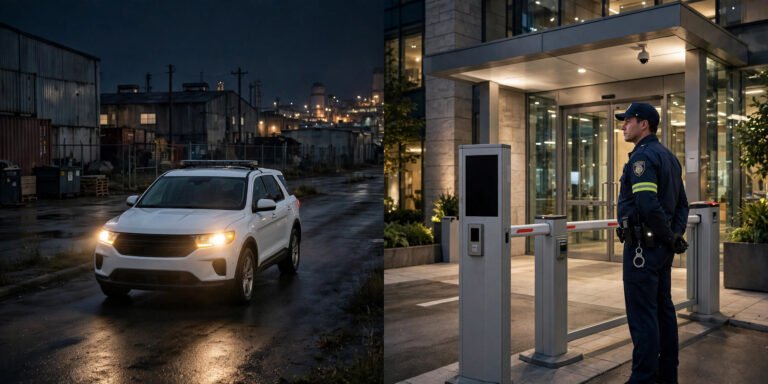

“How much does a security guard cost?” is usually the second question a Sydney business asks — right after “can you cover us, and how soon?” And like most honest pricing questions, the answer is a range, not a single number. A single guard on a quiet weekday day shift and a team of crowd controllers at a licensed venue on a Saturday night are both “hiring a security guard”, but the bill is nothing alike.
This guide gives you the indicative Sydney rates for 2026, the seven factors that move the price up or down, and how to read competing quotes so you compare like with like — not just the headline hourly figure.
Indicative Rates for Sydney in 2026
As an indicative guide only — not a quote — Sydney security providers commonly charge in the vicinity of $50–$80 per guard per hour (plus GST), with minimum booking periods of around four to six hours. Straightforward static guarding sits at the lower end of that range; specialist roles — licensed crowd controllers at venues, close protection, canine units — sit above it.
Evening, weekend and public-holiday loadings apply across the industry, typically adding 25–50% to base rates. A public-holiday shift can cost close to double a weekday day shift for the same guard doing the same job, because the award rates behind it do.
Treat any figure you read online as a starting point. The only number that matters is the itemised written quote for your specific site — which any reputable company, including A4S Security, will provide free. If a quote comes in far below the indicative range, ask what has been left out: licensing, insurance, supervision and proper award pay all cost money, and a quote that skips them is not a bargain, it is a risk.
The 7 Factors That Drive the Cost
1. How many guards you need
This is the biggest single driver, and it is driven by your site, not by a fixed formula. A single-entry retail shop needs one guard; a construction site with two gates, a laydown area and a plant yard may need two, or one guard plus overnight patrols. A venue with three entrances needs coverage at each one. Be wary of any company that quotes guard numbers without asking about your layout, your hours and your incident history — they are guessing, and you pay for the guess either in the quote or in the gaps.
2. How long, and when
Minimum shift lengths (usually 4–6 hours) mean a three-hour job still pays for the minimum. That is why a short one-off booking can look expensive per hour, while a regular weekly roster works out cheaper: the same guard, the same site, no repeated briefings.
When the hours fall matters as much as how many there are. Day shifts on weekdays are the cheapest. Nights, weekends and public holidays carry loadings, and a 24-hour requirement is priced as a roster — day, night and weekend rates blended — not as a single hourly figure multiplied by 24.
3. Static guard, mobile patrol or crowd controller
The type of cover changes the price more than most people expect:
- Static guard — one officer, on site, for the full shift. The right answer when a post must be manned continuously: a gate, a reception, a retail floor.
- Mobile patrol — a patrol officer visiting at scheduled and random times, checking doors, perimeters and signage. Because one patrol covers several sites in a night, it costs far less than a guard on site all night — and for many warehouses, car parks and vacant properties it is the better buy. Our mobile patrols page explains where patrols beat a static post.
- Crowd controller — a licensed specialist, legally required at licensed venues and many ticketed events in NSW. Higher rate, reflecting specialist licensing and training, and a distinct line item in the quote. See our crowd controllers page for when they are required.
Paying for a static guard where a patrol would do is the most common way businesses overspend on security. A good provider will tell you that, even though it costs them the bigger booking.
4. The site and the risk
A quiet office lobby and a high-value construction site with plant and copper on it are priced differently because the risk, the training and the supervision are different. Factors that push the price up: previous break-ins or incidents on site, high-value stock or equipment, cash handling, isolated locations, alcohol service, and large or unpredictable crowds. Factors that bring it down: good lighting, working CCTV, a single controlled entry point and a clean incident record. Security pricing follows risk — which is why a site visit or a proper briefing usually produces a better quote than a phone estimate.
5. Location and travel
Most Sydney providers price by the job, not by the kilometre, but distance still shows up in the quote — in travel time for the guard, in response time for a call-out, and in whether a provider can actually staff the site reliably. A provider based in Penrith covering Western Sydney day in, day out will quote differently from one sending a guard across the city for a one-off shift. If your site is a long way from a provider’s base, ask how they cover sick days and no-shows — the cheapest quote is no saving at all if the post sits empty.
6. One-off, short-term or ongoing contract
A single night’s cover costs more per hour than the same hours on an ongoing roster. Regular work lets a provider roster the same guards, brief them once, and plan around your site — and that efficiency shows up in the price. Short-notice and emergency call-outs cost more again, because they mean pulling a guard off another roster or paying overtime. If you know a job is coming — a fit-out, a stocktake, a seasonal peak — booking early is the simplest way to keep the price down.
7. What is included in the quote
Two quotes at the same hourly rate can be very different deals. Before you compare prices, check that each quote includes the same things:
- Licensed, uniformed guards (NSW security licence, checked — ask to see it)
- Public liability insurance and workers’ compensation
- Supervision, rostering and a replacement if a guard calls in sick
- Incident reporting and a point of contact you can actually reach
- GST — is the quoted rate plus GST or inclusive? It makes a 10% difference
A quote that leaves any of those out is not cheaper. It is incomplete, and the missing piece becomes your problem the first time something goes wrong.
How to Compare Quotes Fairly
Get at least two itemised written quotes, and compare them line by line: number of guards, hours, role (static, patrol or crowd controller), loadings, minimums, and what is included. A quote that only gives you a single hourly figure has not actually quoted your job.
Ask three questions of every provider: are your guards licensed in NSW and can I verify it? What happens if my guard calls in sick? And what is your response time for an urgent call-out? The answers tell you more about what you are buying than the hourly rate does — and they are the questions a provider who intends to be there at 2am will answer without hesitating.
Finally, check the company, not just the price. Reviews, how long they have operated in Sydney, and whether they already work in your suburb or sector all matter. A provider who already covers construction sites across Western Sydney will staff yours better than one learning the area on your job.
When a Guard Is Not the Cheapest Answer
For some sites, the right answer is not a guard at all — or not a guard all the time. Overnight, a mobile patrol visiting at unpredictable times often gives a warehouse, car park or vacant property better coverage per dollar than a lone guard sitting through a quiet night. During the day, a static guard at the gate plus patrols after hours can cost less than 24-hour static cover while closing the gaps that matter. And for a one-off event, the numbers change again — our guide to event security cost in Sydney breaks that case down separately, because events are priced by crowd, risk and duration rather than by the shift.
The honest test is simple: what are you protecting, when is it actually at risk, and what is the cheapest cover that genuinely covers it? A provider who asks those questions before quoting is the one worth hiring.
Getting Your Quote
The fastest way to a real number is a short brief: your site address, the hours you need covered, how many entry points there are, and anything that has happened there before. With that, a provider can give you an itemised quote — guards, hours, loadings and inclusions — instead of a guess. A4S Security provides free quotes across Sydney, with licensed security guards available for short-notice and ongoing work. Tell us the site and the hours, and we will tell you exactly what it costs — no figure hidden in the fine print.
Frequently Asked Questions
How much does it cost to hire a security guard in Sydney?
As an indicative guide for 2026, Sydney providers commonly charge around $50–$80 per guard per hour plus GST, with a minimum booking of about four to six hours. Evening, weekend and public-holiday loadings typically add 25–50%. The final price depends on the number of guards, the hours, the type of cover and the risk profile of your site — the only firm number is an itemised written quote for your specific job.
Is there a minimum booking period?
Usually, yes — most providers set a minimum shift of four to six hours. A three-hour job still pays for the minimum, which is why short one-off bookings can look expensive per hour, while a regular roster works out cheaper. Ask for the minimum to be stated in the quote, not discovered on the invoice.
Are mobile patrols cheaper than a static guard?
Almost always, for overnight cover. A patrol officer visits several sites in a night, so the cost is shared — while a static guard is on your site for the full shift and billed for every hour. For warehouses, car parks, vacant properties and construction sites after hours, patrols are often the better buy. For a gate, a reception or a retail floor that must be manned continuously, a static guard is the right answer.
Do I pay extra for nights, weekends and public holidays?
Yes — loadings apply across the industry, typically 25–50% above the base rate, and public holidays can cost close to double a weekday day shift. A 24-hour requirement is usually priced as a blended roster rather than a single hourly figure, so ask for the roster broken down by day, night and weekend rates.
How do I know if a security company is licensed?
In NSW, security guards must hold a current security licence, and the company must be licensed too. Ask for the licence details and verify them — a reputable provider will give them without hesitating. Also check that the quote includes public liability insurance and workers’ compensation, and ask what happens if your guard calls in sick. If any of those questions gets a vague answer, keep looking.