
Warehouses hold a lot of value in one place — stock, equipment, copper, tools, and vehicles — which is exactly why they’re targeted. In Australia, warehouse losses don’t just come from dramatic break-ins. More often they come from internal theft, delivery fraud, and gaps nobody fixed: a gate left unlocked, a camera that stopped recording months ago, a contractor who still has a key from last year.
This checklist walks through the security basics every Australian warehouse should have in place, from the perimeter fence to the last audit report. Work through it section by section — each fix closes a real gap.
1. Perimeter & Fencing
The perimeter is your first line of defence, and it’s the one most sites neglect first.
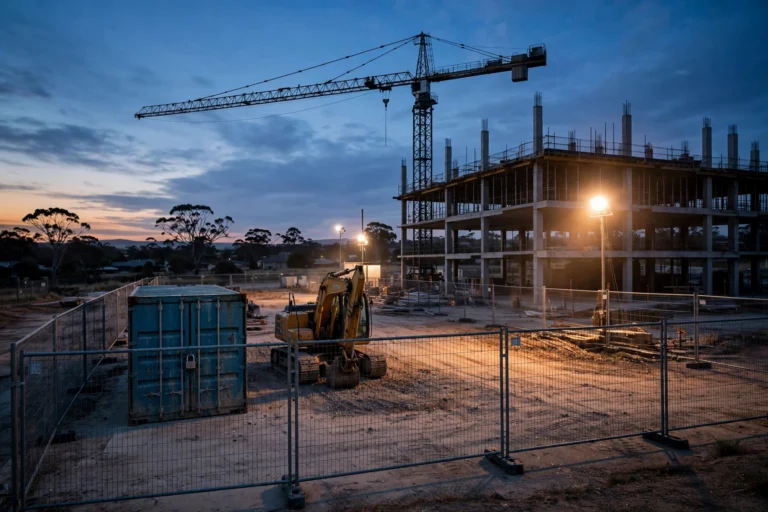
- Fencing is intact and climb-resistant. Check the full boundary — palisade or mesh fencing in good repair, no cut sections, no gaps under gates, no missing palings. Walk it monthly; vandals and thieves test weak spots first.
- Gates are locked and controlled. Vehicle and pedestrian gates should never be propped open “just for the shift”. Fit gates with proper locks or electronic access, and make sure closing them is someone’s actual job, not an assumption.
- No climbing aids near the fence. Pallets, bins, stored equipment and stacked goods piled against the fence become a ladder. Keep a clear strip inside the boundary.
- Signage is posted. Warning signs about CCTV, alarm monitoring and trespass aren’t decoration — they support prosecution and deter opportunists.
2. Access Control & Key Management
Most warehouse thefts involve someone who had legitimate access — or who once did.
- One key register, kept current. Every key, swipe card and PIN is logged against a named person. When staff or contractors leave, access is revoked the same day — not “when we get around to it”.
- Limit who holds master access. Master keys and admin-level codes should sit with a handful of trusted managers, never with casual staff or cleaners.
- PIN codes changed on rotation. Change alarm and gate codes when staff turn over, and at minimum every six months.
- Deliveries screened. Drivers should report to a controlled entry point, not wander the floor. Sign them in, limit them to the dock area, and verify what they pick up against the paperwork.
3. Lighting
Good lighting is the cheapest deterrent you’ll ever buy — and poor lighting voids the value of everything else.
- Full perimeter lighting after dark. No dark corners along the fence line or behind the building. Motion-sensor floods are fine for low-traffic zones; keep them aimed and working.
- Docks and entry points lit to camera standard. If your CCTV can’t see clearly at night, the footage is useless as evidence. Test cameras after dark, not just at install.
- Failures fixed within 24 hours. A dead floodlight is an invitation. Log outages and treat them as urgent.
4. CCTV & Alarms
Cameras and alarms only work if they’re monitored, maintained, and actually recording.
- Cameras cover entries, docks, aisles and the yard. Blind spots are where stock walks out. Map camera coverage against your floor plan at least yearly — layouts change, racking moves, coverage gaps appear.
- Recording is verified, not assumed. Check that the system records continuously (or on motion as designed), timestamps are accurate, and footage is retrievable. Pull a test clip monthly.
- Retention meets your needs. Keep footage long enough to catch slow-burn losses — internal theft is often discovered weeks later. Thirty days is a sensible minimum.
- Alarms are monitored with a response plan. An alarm that rings to an empty office achieves nothing. A monitored system should trigger a guard response — mobile patrol services can attend activations and secure the site after hours.
- Back-to-base and battery backups tested. Power cuts and tampering are when you need the system most. Test quarterly.
5. Inventory Control
You can’t investigate losses you never measured. Inventory discipline is security discipline.
- Cycle counts run on schedule. Regular spot checks on high-value lines catch shrinkage while it’s still traceable. Annual full counts alone are too slow.
- Receiving and dispatch are reconciled. Every inbound pallet checked against the purchase order; every outbound load against the manifest. Shortages get flagged the same day.
- High-value stock is segregated. Cage it, lock it, and limit access. The goods worth stealing most should have the tightest controls.
- Waste and returns are controlled. Bins and return cages are a classic concealment route. Secure them and audit returns like you’d audit sales.
6. Staff, Contractors & Visitors
Insider involvement is a factor in a large share of warehouse losses. Hiring controls and clear procedures close that door.
- Background checks for warehouse staff. At minimum, reference and identity checks; for high-value sites, police checks where the role warrants it.
- Segregation of duties. The person who receives stock shouldn’t be the person who records it, and dispatch shouldn’t be a solo job for high-value loads.
- Visitor and contractor sign-in. Everyone on site is logged with a name, company, purpose and time — no exceptions for “regulars”.
- Clear reporting channel. Staff need a safe, simple way to report suspicious behaviour — and they need to see that reports are acted on.
7. Deliveries & Dispatch
The dock is the busiest door in the building and the hardest to police — it’s also where most stock legitimately moves.
- Docks supervised during loading. Unattended loading is an open invitation. A supervisor or guard presence at the dock deters both external and internal theft.
- Seals and documentation. Use numbered seals on high-value loads and match them to the paperwork. Break the chain and you lose the audit trail.
- Parking and staging controlled. Keep the yard organised — staged pallets near the gate, unmarked vehicles lingering at the dock, and after-hours trailers are all red flags.
8. After-Hours Protection
Warehouses are most vulnerable when nobody’s there. Your after-hours setup deserves the most planning, not the least.
- Premises locked down properly. End-of-shift lockup procedure: gates, shutters, office doors, alarm set. Checklist, not memory — and someone signs it off.
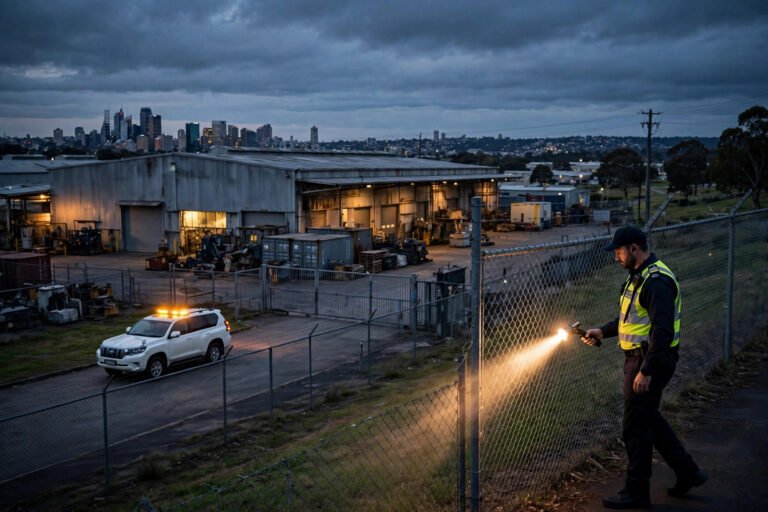
- Random patrol checks overnight. mobile patrol services visiting at unpredictable times check perimeters, entry points and interiors — the unpredictability is the whole point. Nobody watching the site can learn the pattern.
- Static guard for high-risk sites. Where stock value or incident history warrants it, a licensed security guard on-site overnight is the strongest deterrent — and immediate response if something happens.
- Alarm response arrangement in place. Know exactly who attends an activation, how fast, and what they do when they get there. Test it, don’t just file it.
When to Call in the Professionals
If you’re ticking most of these boxes and still seeing losses — or if the site’s value, location or history puts it above a basic setup — it’s time for a professional assessment. A proper asset protection review looks at your site the way a thief would: approach routes, blind spots, procedural gaps, and the weak link you stopped noticing because you see it every day.
Common triggers for bringing in help: repeated break-ins, unexplained shrinkage, a new high-value contract, insurance requiring upgraded measures, or a site sitting partially empty between tenants.
Frequently Asked Questions
What’s the biggest security risk for warehouses in Australia?
Theft — both external break-ins and internal theft — followed by vandalism and unauthorised access after hours. Sites with high-value, easily resold goods (electronics, tools, copper, liquor) are hit hardest. The common thread in most incidents is a gap in the basics: unlocked gates, unrevoked access, unmonitored alarms, or inventory that’s never properly audited.
Do warehouses need security guards, or are alarms enough?
Alarms detect; guards respond. A monitored alarm with no attendance arrangement just records the crime. For most warehouses, the right mix is layered: solid perimeter and lighting, working CCTV and monitored alarms, plus a response arrangement — mobile patrol checks, alarm response, or a static guard for high-risk sites.
How often should warehouse perimeters be checked?
Your own team should walk the fence line monthly at minimum. After hours, random mobile patrol visits — at unpredictable times, several nights a week — are the industry standard for deterring anyone casing the site. Fixed, predictable check times can be learned and worked around.
What should a warehouse access-control policy cover?
Four things: a single register of every key, card and PIN against a named person; same-day revocation when staff or contractors leave; limited master access held by a few trusted managers; and PIN/code rotation at least every six months or on staff turnover. Add controlled delivery screening at the dock and a visitor sign-in log.
How do I reduce internal theft in a warehouse?
Segregate duties so no one person controls a full stock movement (receiving, recording, dispatch). Run regular cycle counts on high-value lines, secure and audit returns and waste, limit access to caged high-value stock, and give staff a safe channel to report suspicious behaviour — then act visibly on reports so the channel stays credible.
Running a warehouse? Call A4S Security on (02) 4713 1781 for a free warehouse security assessment — no obligation, no jargon, just the right coverage at a fair price.