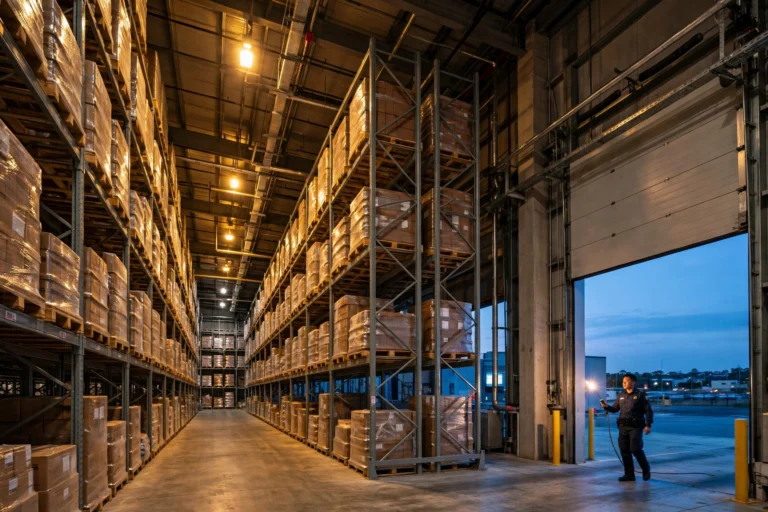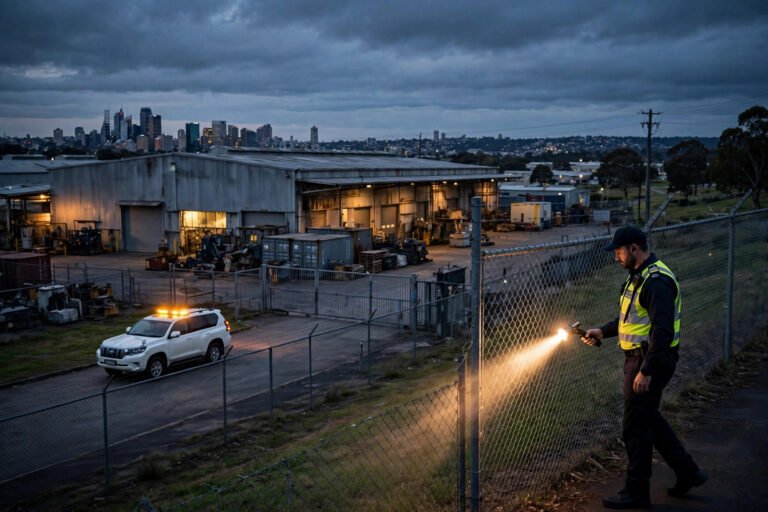

Construction sites are open by design — deliveries coming and going, multiple trades on and off, valuable plant and materials everywhere — which makes them easy picking. In Australia, site theft rarely looks like a smash-and-grab. It’s more often slow and opportunistic: tools disappearing from an unlocked container, copper walked off in a lunch bag, a trailer gone overnight from an unfenced yard.
The good news: most of these losses are preventable with basic discipline and a few targeted investments. These tips cover what actually works on Australian building sites, from the fence line to the last lockup check.
1. Fencing & Perimeter
If thieves can walk onto your site, everything else is fighting uphill.
- Secure the full perimeter with construction fencing. Temp fencing is fine — but it must actually close the site. Panels tied together, no lifted corners, no gaps where materials get “walked” through.
- Gates lockable and actually locked after hours. Vehicle gates are the most common entry point for night thefts. Fit them with quality padlocks or coded locks, and assign one person to the after-hours lockup.
- One entry point, controlled. Multiple open gates mean nobody knows who’s on site. Funnel deliveries and trades through a single entry and log them.
- Clear sightlines. Stack materials and containers so they don’t create hiding spots against the fence. Keep a clear strip inside the boundary where possible.
2. Plant & Equipment Security
Plant theft is the most expensive line item on most sites — and much of it is preventable.
- Immobilise everything overnight. Keys out, ignition disabled where possible, and plant parked in a tight group in the most visible part of the site. A lone excavator at the far boundary is a target.
- Fit tracking devices to high-value plant. GPS trackers on excavators, bobcats and generators pay for themselves the first time they lead you — or the police — to a stolen machine.
- Store small plant inside containers. Compactors, pumps, lasers and surveying gear should never sit in the open overnight. If it’s hand-carryable, it’s hand-stealable.
- Key register, not a nail on the shed wall. Every plant key logged to a named operator. Spares in a lockbox, not the site office drawer that half the subcontractors have opened.
3. Materials & Tools
Copper, power tools and stored materials are the bread and butter of site theft.
- Lockable containers for tools and high-value stock. Sea containers with proper lock boxes (not just the standard latch) for tools, fittings and copper. The container itself should be sited centrally, in view.
- Copper stored last, installed fast. Copper cable and pipe are the single most targeted material on Australian sites. Don’t stockpile it — schedule delivery as close to installation as possible.
- Just-in-time delivery for high-value items. Appliances, switchboards, tapware — have them arrive when the trades are ready to fit them, not weeks early to sit in a shed.
- Mark and register tools. Engrave or stencil company identifiers on power tools and ladders. Marked gear is harder to fence and easier to return if recovered.
4. Lighting & CCTV
A dark, unmonitored site is an invitation — good lighting and cameras change the calculation.
- Tower lights or floods covering the storage zone after dark. Plant park-up, containers and material stores should be lit to camera standard all night. Solar units work where there’s no site power yet.
- Cameras on entries, plant storage and containers. Even basic CCTV changes behaviour — thieves case sites first, and visible cameras move them to the next one. Cover the gates and the container row as a minimum.
- Recording verified, not assumed. Test that the system actually records and timestamps correctly. A camera that “looks” working but hasn’t recorded for a month is worse than none — it’s false confidence.
- Signage posted. “CCTV in operation” and “alarmed premises” signs at the gates support deterrence and any prosecution.
5. People & Procedures
Most site losses involve someone who knew the site — a subcontractor, a labour-hire worker, or a visitor who cased it during the day.
- Sign-in register for everyone on site. Subcontractors, delivery drivers, visitors — name, company, time in, time out. It’s free, it deters, and it tells you who was around when something goes missing.
- Deliveries checked against paperwork. Short loads and “extra” pallets walked off with the paperwork are a classic. Reconcile what arrives against the docket, every time.
- Toolbox talk on security. A five-minute briefing at induction: lock up your tools, don’t prop gates, report anything unusual. The culture matters as much as the hardware.
- End-of-shift lockup routine. Checklist, not memory: plant parked and locked, containers shut, gates locked, lights on, alarm set. One person owns it and signs it off.
6. After-Hours Protection
Sites are most vulnerable when nobody’s there. Your overnight setup deserves the most planning, not the least.
- Random patrol checks overnight. mobile patrol services visiting at unpredictable times check fencing, plant storage and containers — the unpredictability is the whole point. Thieves casing the site can’t learn the pattern.
- Static guard for high-value or long-running sites. Where plant value, material stock or incident history warrants it, a licensed security guard on-site overnight is the strongest deterrent — and immediate response if something happens.
- Alarm response arrangement in place. Know exactly who attends an activation, how fast, and what they do when they arrive. Test it, don’t just file it.
- Weekend and holiday coverage planned. Long weekends and shutdown periods are peak theft windows. Lock down harder, not less, when the site goes quiet.
When to Call in the Professionals
If you’re ticking most of these boxes and still seeing losses — or if the site’s value, location or history puts it above a basic setup — it’s time for a professional assessment. A proper construction site security review looks at your site the way a thief would: approach routes, blind spots, procedural gaps, and the weak link you stopped noticing because you see it every day.
Common triggers for bringing in help: repeated break-ins, unexplained tool or material losses, a high-value project in a high-risk area, or insurance requiring upgraded measures. For sites in the south-west, the same applies — construction security in Campbelltown covers the Macarthur region.
Frequently Asked Questions
What gets stolen most from Australian construction sites?
Power tools first, then copper cable and pipe, then plant and equipment (trailers, generators, compactors). Materials like doors, appliances and tapware go when they’re stockpiled before fit-off. The common thread: items that are valuable, portable and easy to resell.
Do I need a security guard, or are fencing and cameras enough?
For low-value or short-duration sites, good fencing, lighting, CCTV and lockup discipline may be enough. For sites with high-value plant, stored copper or a history of incidents, guards — either mobile patrol checks or a static overnight guard — are the layer that turns detection into deterrence and response. Alarms and cameras record the crime; guards stop it.
How do I protect copper on my site?
Three things: schedule copper delivery as close to installation as possible so it’s never stockpiled; store any copper on site in a locked container in a lit, camera-covered spot; and keep it off the schedule board — don’t advertise on signage or social media when high-value materials arrive. Opportunistic theft follows opportunity.
Are mobile patrols effective for construction sites?
Yes — they’re the standard overnight answer for Australian sites. Patrols visit at unpredictable times through the night, check fencing, gates, plant and containers, and respond to alarms. The key is unpredictability: fixed, predictable check times can be learned and worked around, so random timing is what makes patrols effective.
What should I do immediately after a break-in?
Secure the site first — check for hazards, re-lock what you can. Then document everything: photos of damage and entry points, a list of what’s missing with serial numbers if you have them, and the sign-in register for who was on site. Report to police with the documentation. Then fix the gap the thieves used before the next night — most repeat quickly once they know a site is soft.
Running a construction site? Call A4S Security on (02) 4713 1781 for a free construction site security assessment — no obligation, no jargon, just the right coverage at a fair price.